BLOGS
& MORE
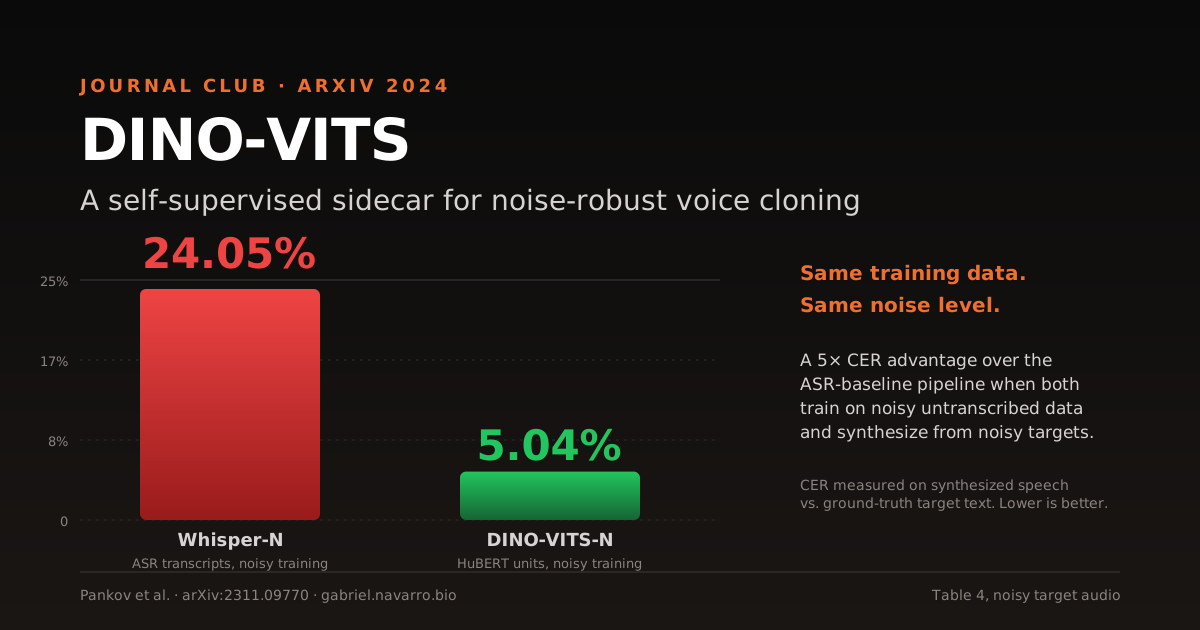
DINO-VITS: A SELF-SUPERVISED SIDECAR FOR NOISE-ROBUST ZERO-SHOT VOICE CLONING
Pankov et al. attach a DINO self-supervised loss to the speaker encoder of a VITS-based zero-shot TTS system. Noise robustness improves; here is what survives an honest read.
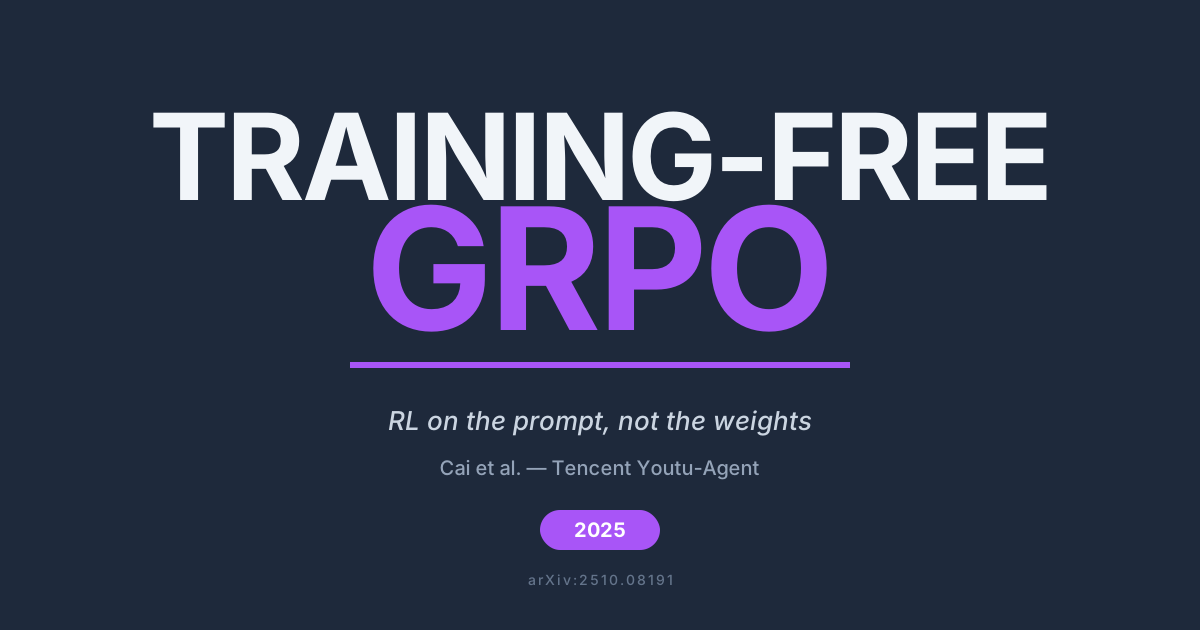
TRAINING-FREE GRPO: DOING RL ON THE PROMPT, NOT THE WEIGHTS
Tencent's Youtu-Agent team adapts GRPO to a frozen LLM by replacing the gradient with a natural-language experience buffer, beating fine-tuned 32B models for around eighteen dollars.
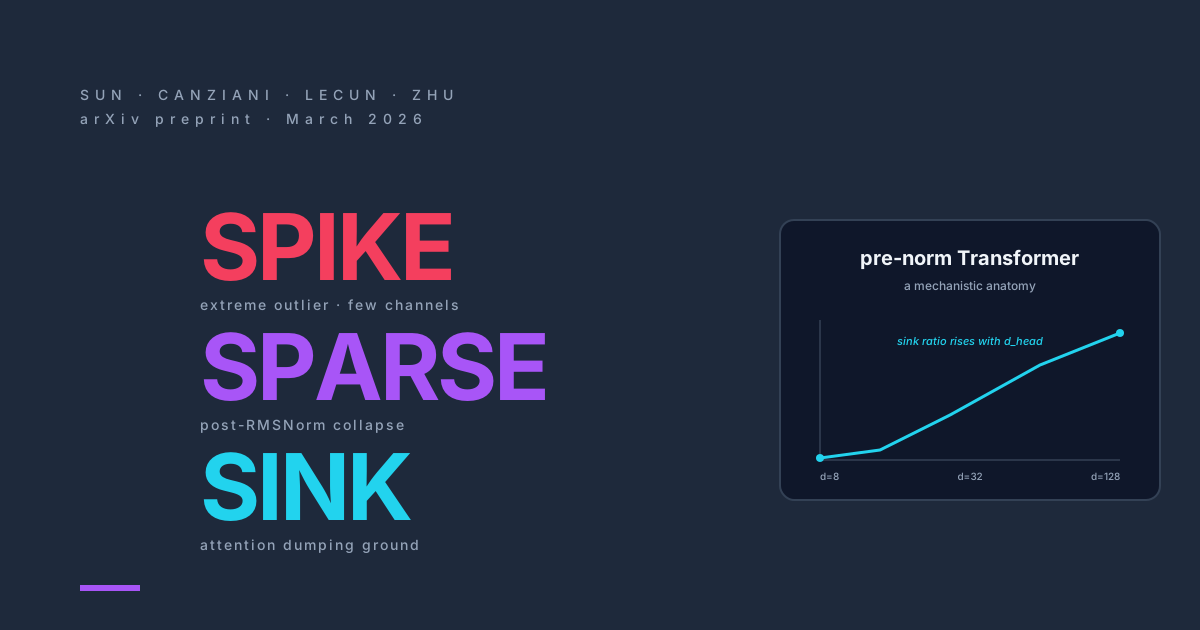
THE SPIKE, THE SPARSE AND THE SINK: ANATOMY OF MASSIVE ACTIVATIONS AND ATTENTION SINKS
Sun, Canziani, LeCun, and Zhu dissect why pre-norm LLMs grow giant outlier activations and attention sinks together, then show the two phenomena are decoupled architectural artifacts you can suppress independently.

PORTELLO: MAKING GLOBAL ASSEMBLY MORE EFFECTIVE FOR RARE-DISEASE WHOLE GENOME SEQUENCING
Saunders et al. introduce portello: transfer HiFi read alignments from the sample's own de novo contigs onto GRCh38, and DeepVariant removes 47% of small-variant basecall errors compared with conventional read mapping.

BREAKING FREE FROM CONTEXT LIMITS: RECURSIVE LANGUAGE MODELS EXPLAINED
"This entry is a summary of the paper "Recursive Language Models" where Zhang, Kraska & Khattab introduce an approach to scaling Large Language Models (LLMs) by adding conditional memory"
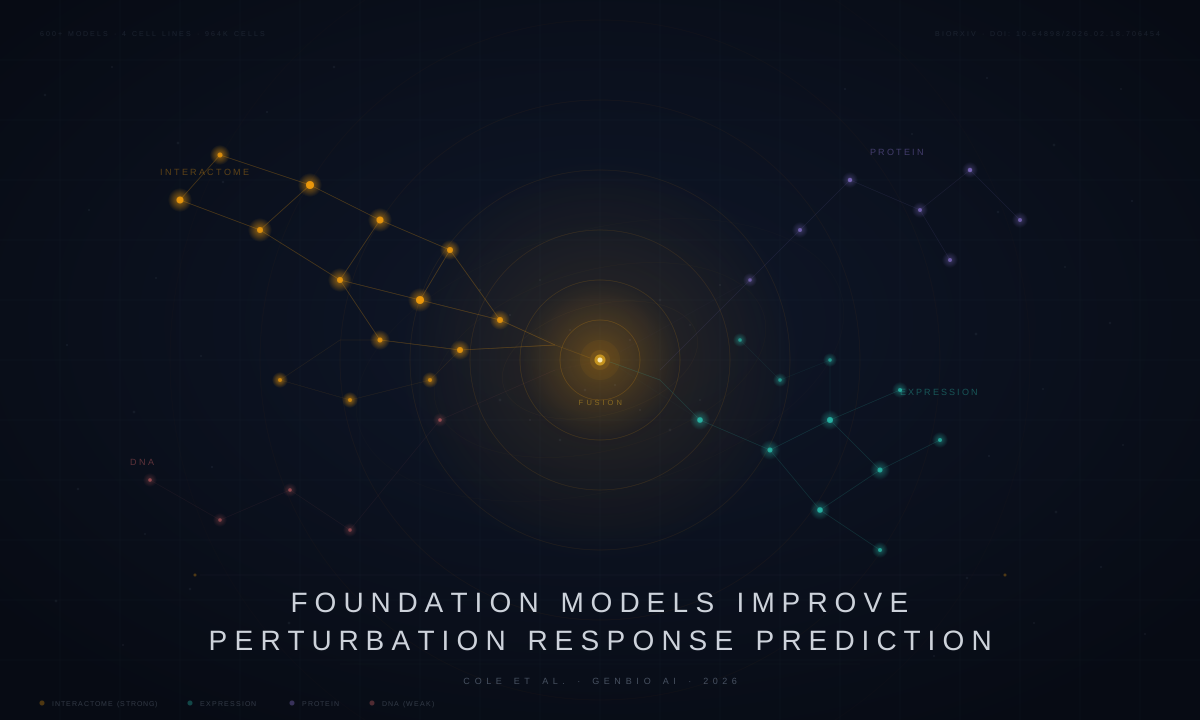
FOUNDATION MODELS IMPROVE PERTURBATION RESPONSE PREDICTION
""This entry is a summary of the paper "Foundation Models Improve Perturbation Response Prediction" where Cole et al. tackles a central question in computational biology: can foundation models — large pretrained neural networks — actually help predict how cells respond to genetic or chemical perturbations? ""
BREAKING FREE FROM CONTEXT LIMITS: RECURSIVE LANGUAGE MODELS EXPLAINED
This entry is a summary of the paper "Recursive Language Models" by Zhang, Kraska & Khattab
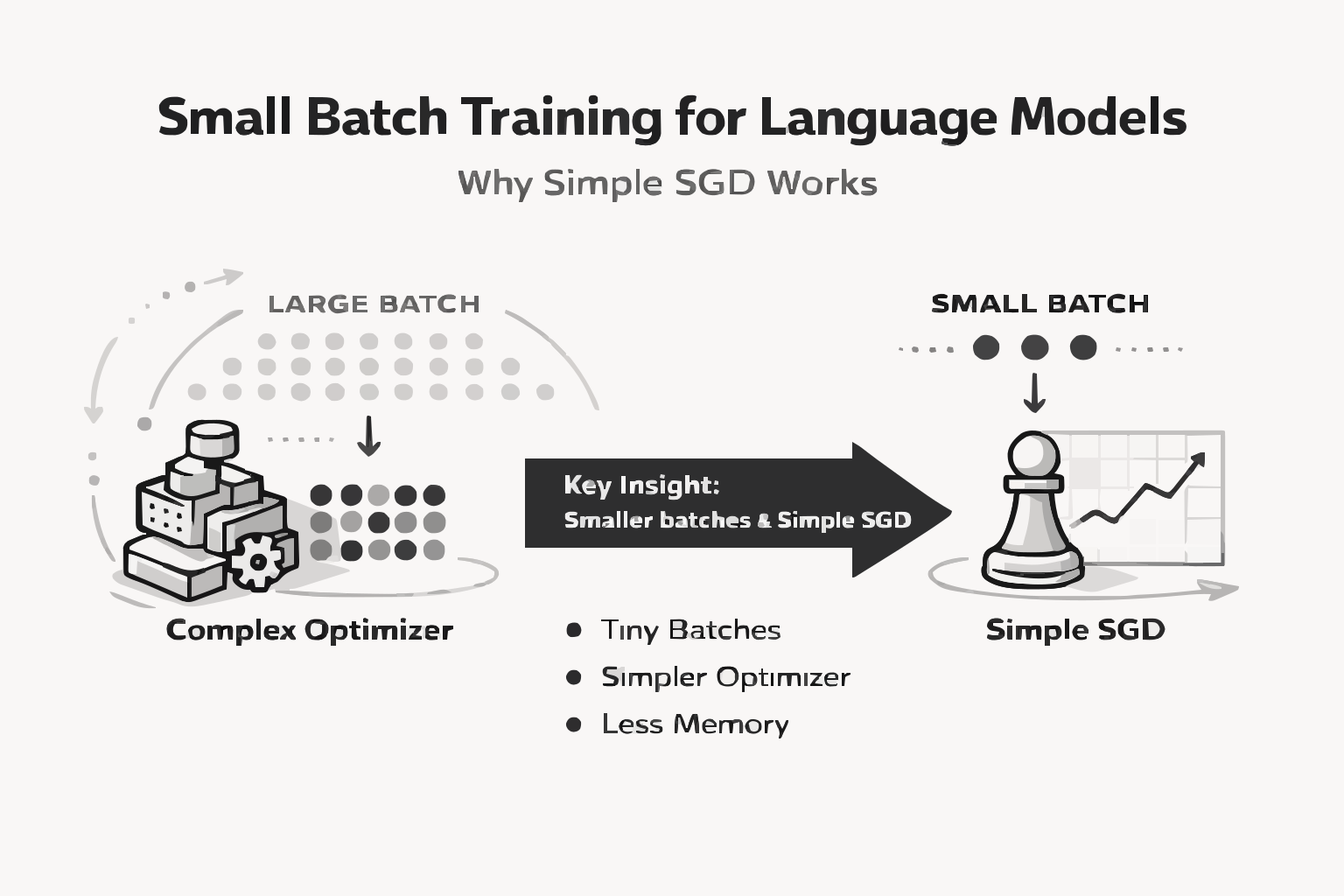
SMALL BATCH TRAINING FOR LANGUAGE MODELS: WHY SIMPLE SGD WORKS
"This journal club blog reviews the paper "Small Batch Training for Language Models: Why Simple SGD Works" by Marek et al."
BOLTZ-1X: A COMPREHENSIVE GUIDE TO NEXT-GENERATION PROTEIN STRUCTURE PREDICTION USING BOLTZMANN-INSPIRED DEEP LEARNING
This technical blog provides a complete tutorial for implementing Boltz-1x, a novel protein structure prediction model that combines Boltzmann-inspired architecture with modern deep learning, including Docker setup instructions and a practical demonstration predicting the GSK3A-FRAT1 protein complex with high accuracy (0.71 Å RMSD).

FORECASTING BITCOIN WITH MAMBA STATE SPACE MODELS
An intuitive guide to forecasting minute-by-minute Bitcoin OHLCV data using the fast, memory-efficient Mamba State Space Model—from Docker setup and minimal preprocessing to PyTorch Lightning training and comparison against Transformer baselines.
SCALING YOUR ML TRAINING WITH VERTEX AI CUSTOM JOBS ON GCP
This blog is a step-by-step guide to scaling machine learning training with Vertex AI Custom Jobs on Google Cloud, covering Docker image creation, data upload, job submission, and GPU optimization for efficient cloud-based workflows.
FLASHATTENTION: ACCELERATING DEEP LEARNING WITH DOCKER
A concise, step-by-step demo of how to containerize FlashAttention and train a simple autoregressive Transformer on minimally preprocessed Bitcoin minute-by-minute data.

REPRODUCIBILITY IN ML WITH DOCKER
Learn how to use Docker to ensure reproducibility in machine learning projects, from local development to production deployment.

FASTQC-RS: QUALITY CONTROL FOR OMICS DATA
FastQC-RS is a modern, Rust-based tool for fast and efficient quality control of FASTQ files, delivering lightweight performance and detailed HTML reports—perfect for ensuring high-quality omics data in genomics and transcriptomics workflows. This guide walks you through Docker-based setup, usage, and key features.
DRAGEN-GATK: HIGH-PERFORMANCE VARIANT CALLING
Dragen-GATK combines Illumina’s hardware acceleration with GATK’s best-practice workflows to deliver ultra-fast, clinically robust germline variant calling. This guide walks you through Docker-based setup, sample analysis, and key parameters to optimize high-performance variant discovery in genomics projects.
SPEEDING UP FASTQ PREPROCESSING WITH FASTP
FastP is an ultra-fast, all-in-one tool for trimming, filtering, and quality-checking FASTQ files, helping you quickly generate clean, high-quality datasets for genomics and transcriptomics projects. This guide walks you through installation, usage, and key features of FastP, making it an essential part of your NGS workflow.